
One Platform for Jobs, Invoices, and Your Website
April 2025
There's a point in every growing small business when the tools that once worked start getting in the way. The spreadsheet that tracked five jobs a month can't handle fifty. The invoicing app doesn't connect to your customer records. The website was built by a friend and nobody knows how to update it. You're spending more time managing your systems than running your business.
This is the inflection point where the most successful small business owners make a move. They consolidate. Here's what that looks like in practice — and how to know when you're ready.
The real cost of running on separate tools
Most small businesses don't realise how much time they lose to tool-switching until they stop doing it. When your job management, invoicing, and customer records are in separate systems, every transaction requires data to be entered multiple times. A customer's name goes into the CRM, then into the job tracker, then into the invoice, then into the payment system. Each entry is a chance for an error. Each error is a chance for a delay. And delays cost money.
What a connected system actually does for you
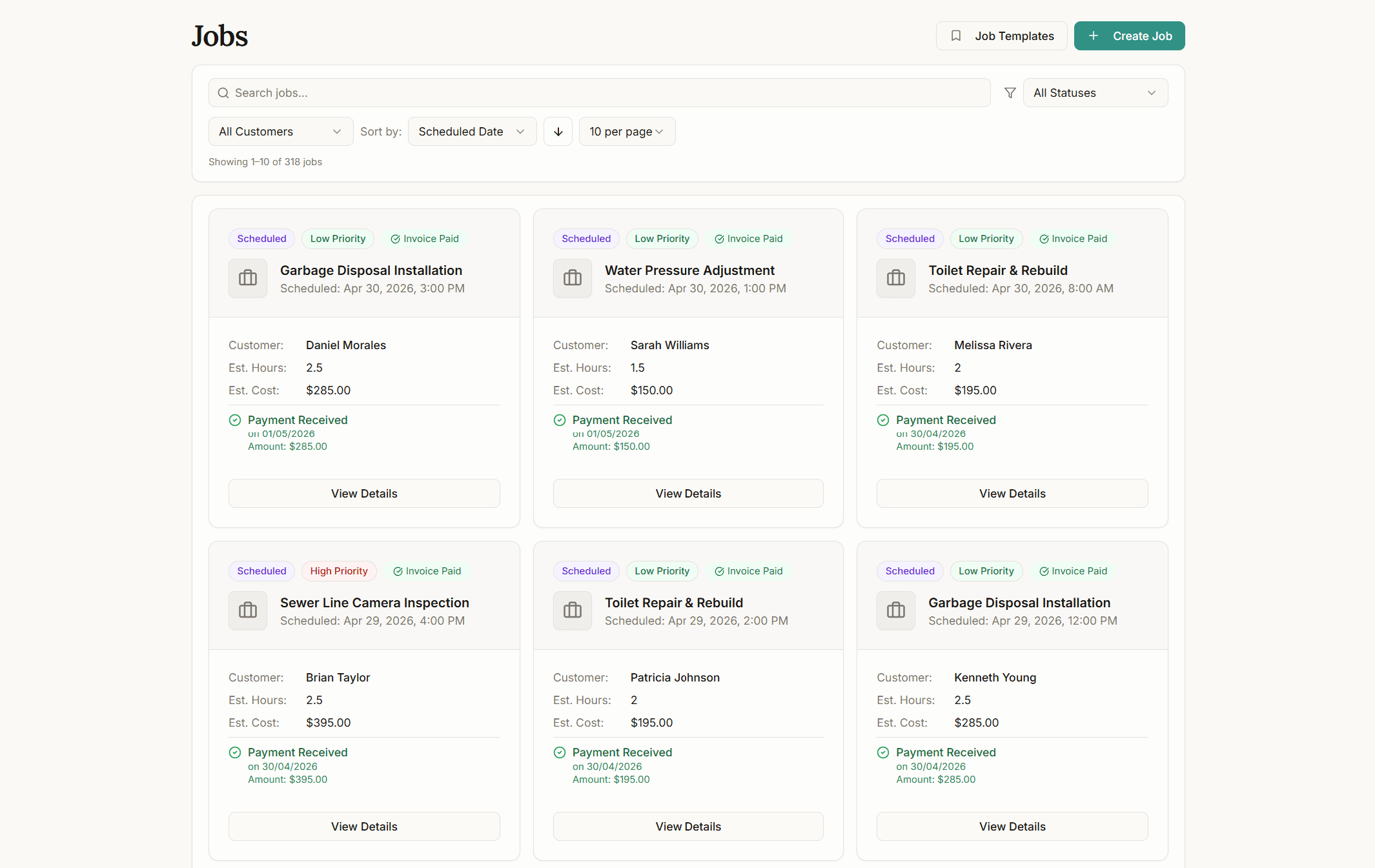
When your jobs, invoices, and customer data are all connected, something powerful happens: the system starts working for you instead of the other way around. A new booking automatically creates a customer record. Completing a job triggers an invoice. The invoice links to online payment. Payment confirmation updates the job status. You're notified at every step — but you don't have to manually drive any of it.
This isn't automation for its own sake. It's the difference between running a business and being run by one.
Your website is part of your operations — treat it that way
Most small business owners think of their website as a separate thing — a digital brochure that someone else manages. But your website is the front door of your business. It's where customers decide whether to trust you before they ever make contact. When your website is part of your operational platform, you can update it yourself, see who's visiting, and connect it directly to your booking or enquiry flow. A website that generates leads automatically is one of the highest-leverage assets a small business can have.
“I was using four different apps and spending at least three hours a week just keeping everything in sync. Moving to one platform cut that to almost nothing. Now I actually know where every job and every dollar stands at any moment.”
— Sarah M., Physiotherapist
What to look for when choosing a platform
Not every "all-in-one" platform delivers on that promise. Here's the shortlist of what genuinely matters:
Job tracking from quote to completion
A visual status board so you always know where every job stands — without asking anyone.
Invoicing with online payment built in
Stripe or equivalent card processing connected directly to your invoices. One click from job done to money received.
Customer records that update automatically
Every interaction, note, and payment linked to the customer — no manual data entry.
A website you can update yourself
Simple, professional, and connected to your booking flow. Not dependent on a developer for every change.
Marketing tools that don't require an agency
The ability to run ads, send emails, and create content without a separate subscription or specialist.
The right time to make the move is now
There's never a perfect time to change your systems — there's always a busy period coming, always a reason to wait. But the businesses that grow are the ones that invest in their infrastructure before they need to, not after. If you're spending more than two hours a week managing admin across multiple tools, the return on switching is almost certainly there. The question isn't whether to consolidate — it's how quickly you can make it happen.